
The Payroll Error Has Already Happened. What Happens Next Matters.
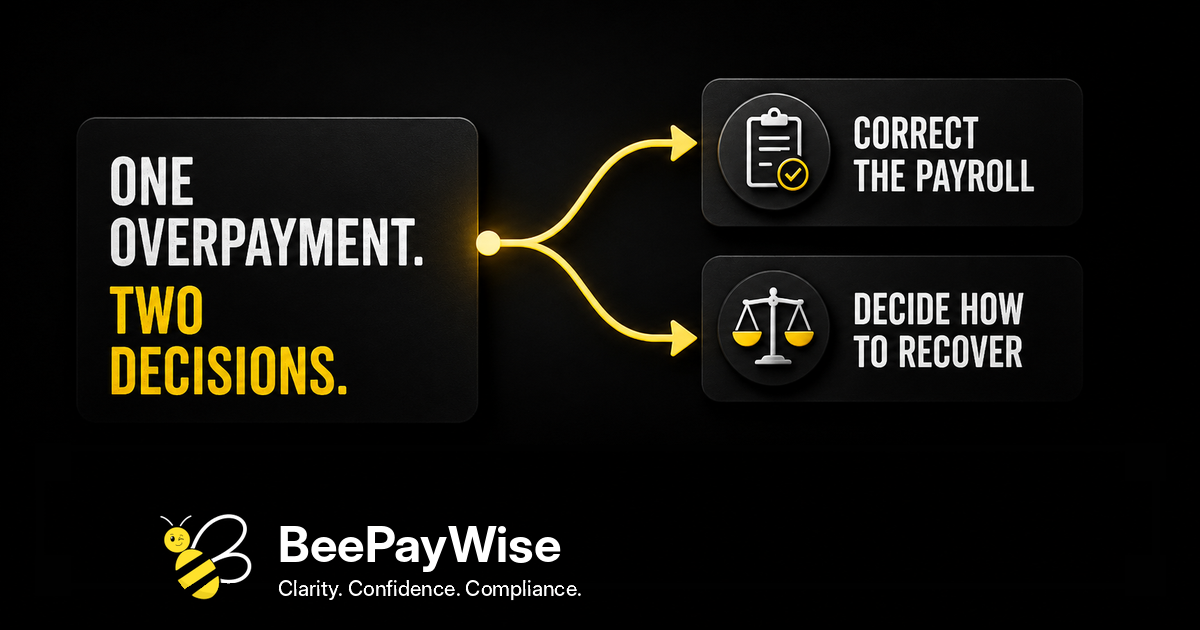
Once an overpayment has occurred, a fair and defined response can stop one payroll mistake from creating a much wider problem.
Discovering a payroll overpayment creates an understandable sense of urgency. The employer has paid money that was not due, the employee has received more than they were entitled to and the next payroll appears to offer a convenient way to put matters right. If the overpayment was £500, the answer can seem equally straightforward: deduct £500 from the employee’s next wage.
The calculation may be accurate. The employer may be entitled to recover the money. The payroll system may be capable of processing the deduction. Yet none of those facts tells us whether taking the whole amount from the next payment is the right way to resolve the situation.
By the time payroll discovers an overpayment, the original error has already happened. What follows is not only about correcting the figures. It is also about how the employer responds when its mistake affects an employee.
More than a number to recover
An overpayment needs to be investigated properly. The employer must understand what was paid, what should have been paid and how the payroll and reporting position should be corrected. Correcting the payroll record and recovering money from the employee are connected, but they should not automatically be treated as the same process. Once the recoverable amount has been established, another question remains: how should that amount be recovered?
The payroll record cannot answer that question on its own. It does not reveal whether the employee noticed the overpayment, whether they reasonably believed their pay was correct or whether the money remains available. Nor does it show what a substantial deduction might mean for the wage they are expecting to receive. A conversation with the employee gives the employer information that the payroll record cannot.
The difference a defined approach makes
An overpayment can expose gaps in responsibility between payroll, HR, finance and line management. The technical correction may be clear, while responsibility for speaking to the employee, deciding how recovery should take place and authorising the deduction is not. Payroll can then be left implementing a decision without knowing what has been explained or agreed.
A defined approach clarifies those responsibilities without requiring every case to produce the same answer. The employee can be shown how the amount has been calculated and given an opportunity to raise questions or explain circumstances that may affect repayment. The employer can then decide how recovery should take place, record the arrangement and pass clear instructions to payroll.
This does not remove the employee’s responsibility to repay money that was not due. It means that recovery is handled openly.
Acas guidance supports this approach. It says employers should speak to the worker and agree how the money will be paid back. Where an overpayment is large or has continued over a longer period, it recommends flexibility, fairness and a repayment plan. That is not a formula for every case, but it recognises that establishing how much is owed and deciding how quickly it should be repaid are not the same decision.
Good process is good employee relations
Employees expect their pay to be accurate. When it is not, an unexpected demand for repayment can affect their confidence in the employer and in the next payslip they receive.
Explaining the error before taking action acknowledges that the employee is dealing with the consequences of a mistake they did not make. Listening before deciding how repayment will work allows the employer to consider information it would not otherwise have. Recording the arrangement gives both sides a clear account of what will happen next.
For the employer, the same approach provides a clear basis for the decision and a record of how it was reached. It reduces the risk that an avoidable misunderstanding becomes an employee relations problem requiring considerably more time and attention than the original error.
What happens next is still within the employer’s control
A defined approach does not produce the same answer in every case. A small, recent and readily understood error may be resolved through the next payroll with the employee’s knowledge. A larger amount, or one accumulated over several months, may call for a different response. What matters is that the employer reaches its decision deliberately, with the relevant facts and the employee’s circumstances in view.
The error may have begun in payroll. The way it is resolved tells the employee something about the employer.
Ready To BeePayWise?
Let’s make your payroll the sweetest, calmest part of your month. Book a hive chat for a no-strings mini-diagnostic, or drop us a message and we’ll buzz right back.