
Your payroll problems may not be payroll problems
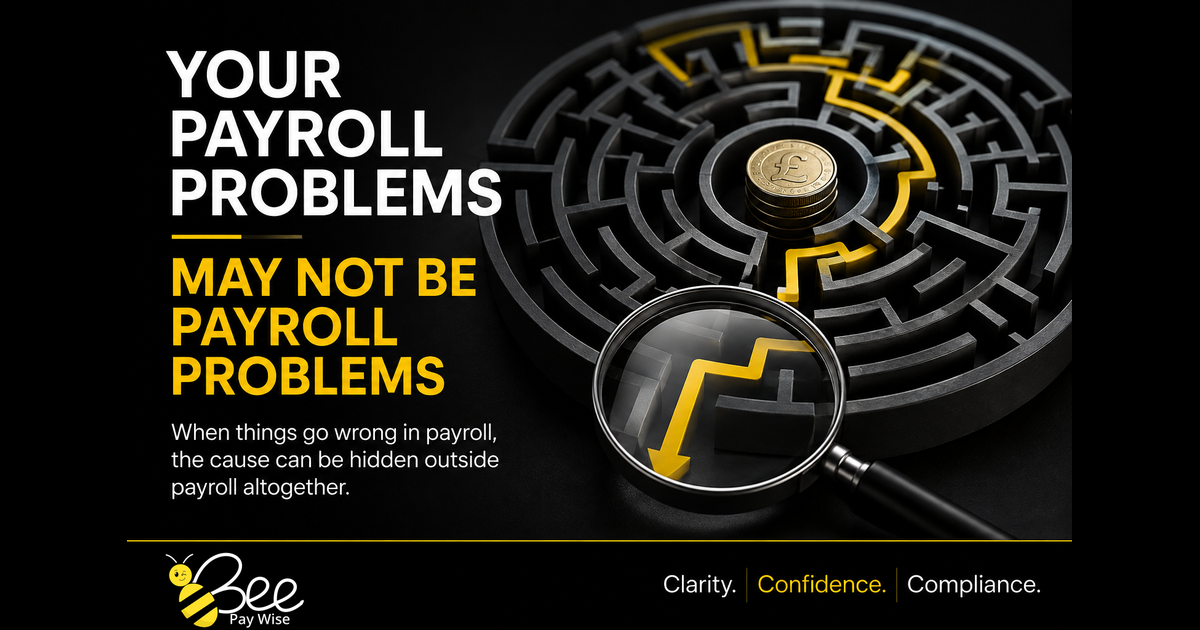
When someone is paid incorrectly, theproblem appears fairly obvious. Something has gone wrong with payroll.
Perhaps overtime has been missed, a salarychange has not been applied or an employee has received a payment they were notexpecting. The payslip is where the problem becomes visible, so it is naturalfor the investigation to begin there, even though the events that produced itmay have started much earlier.
Take something as ordinary as missingovertime. The payroll calculation might accurately reflect the informationprovided, but the hours were recorded incorrectly several days earlier. Theymight have been right when they were recorded but approved incorrectly, or theapproval might have arrived too late to be included.
The employee experiences each of these inexactly the same way: their pay is wrong. Understanding what happened meansfollowing the information backwards through the process that produced it.
Following the problem back
Correcting the employee's pay is theimmediate priority, but the correction does not necessarily tell us much aboutthe cause.
A salary increase might have been agreedbut never communicated. A manager might have approved hours without checkingthem. Two departments might have interpreted the same policy differently, or astarter might have reached payroll with information missing because everybodyinvolved assumed somebody else was responsible for providing it.
Sometimes that investigation will leadstraight back to payroll, because payroll processes and controls can fail justlike any others. In other cases, what appeared on the payslip was simply theeventual financial consequence of something that happened elsewhere in theorganisation.
Payroll is an interesting place from whichto see these problems because information about recruitment, contracts, hours,absence, reward and employment changes arrives from different parts of thebusiness, but eventually much of it has to be translated into pay. Somethingthat can remain unnoticed in a process or unresolved in an email becomes muchmore visible when an employee receives the wrong amount of money.
Finding the original mistake is useful, butunderstanding the process requires looking at what happened between thatmistake and the payroll result.
Looking beyond the original error
If a manager submits the wrong overtimehours, knowing where the error originated is only part of the picture. Theremay have been nothing within the normal process that could reasonably haveidentified it. Payroll cannot independently verify every piece of informationit receives, and trying to do so would make normal processing impossible.
There are, however, things a good payrollfunction can notice. An unusual change may deserve a query, a reconciliationmay reveal an unexpected movement, information from two sources may not agree,or someone familiar with the organisation may recognise that an instructiondoes not look right.
None of this transfers responsibility forupstream processes to payroll. Managers still need to provide and approveaccurate information, HR needs to manage the employment information for whichit is responsible, and payroll needs appropriate controls over what itprocesses. Looking across the whole process simply gives the organisation abetter chance of understanding not only where an error originated, but how ittravelled far enough to affect someone's pay.
That becomes particularly useful when thesame journey happens more than once.
When corrections start to form a pattern
If payroll regularly receives contractualchanges after the cut-off, correcting each affected employee deals with theimmediate consequences. Getting quicker at making those corrections mightimprove the service, but it does nothing to address why decisions affecting payrepeatedly arrive too late.
The same can apply to missing hours,incorrect starter information, unapproved payments or recurring differencesbetween HR records and payroll data. Considering the causes of corrections,rather than simply the number made, can reveal patterns that would otherwiseremain hidden among individual cases.
A recurring problem with late approvals maypoint towards a management process that needs attention. Problems withcontractual changes may reveal an unclear handover between teams, whiledifferences between systems may raise questions about data ownership or howinformation moves through the organisation. A single error rarely tells usenough to reach those conclusions, but a pattern of similar errors can.
Seen together, those corrections becomeuseful information in their own right. Collectively, they can provide evidenceabout how reliably the processes surrounding payroll are working.
A wider view from payroll
Payroll has an unusual view of a businessbecause so many different activities eventually have a financial consequencefor an employee. Recruitment, contractual decisions, working patterns, absence,reward and management approvals may be owned elsewhere, but their effectsregularly converge in payroll.
That does not mean payroll should startmaking decisions that belong elsewhere in the organisation, but its position atthe point where so many of those decisions become pay gives it a usefulperspective on how well the processes around them are working.
Repeated late information, instructionsthat regularly need clarification, recurring corrections with a common cause ordifferences between the information held in different systems can all tell thebusiness something useful. A payroll function that recognises those patternsand feeds that understanding back into the organisation is contributing morethan an accurate calculation at the end of each pay period.
When something goes wrong with anemployee's pay, correcting it will always come first. Once that has been done,following the problem back to where it began can tell you why this employee wasaffected. Looking at how it reached payroll, and whether the same thing hashappened before, can expose a weakness that extends beyond the individual case.
Sometimes the most useful thing a payroll problem canreveal is that payroll was never really the problem.
Ready To BeePayWise?
Let’s make your payroll the sweetest, calmest part of your month. Book a hive chat for a no-strings mini-diagnostic, or drop us a message and we’ll buzz right back.